Photography workshop ideas: what else adults were learning
A workshop can stay focused on photography while making room for another creative skill. A historical US learner map offers ideas to explore with your own participants.
A US arts survey in July 2022, covering the previous 12 months. Influence IQ analysis completed October 26, 2026.
Abstract
Adults learning photography or filmmaking also reported learning other creative subjects during the same year. We examined 471 confirmed learners in the July 2022 US Survey of Public Participation in the Arts. On this common base, 37.8% reported music learning & 35.0% reported other visual arts, through classes or other means. The complete map includes all 7 remaining survey subjects, with sampling intervals & response counts.[1][3]
For an adult-workshop business or educational creator, the map supplies possible companion subjects to explore. It does not show which course people wanted to buy, or whether they learned the subjects in one session. The practical ideas below keep a photography goal central, offer an optional exercise & ask current learners before expanding the offer. A fictional 90-minute workshop & copyable worksheet show how to make that choice concrete.
An adult photography tutor has room for 1 more exercise in a workshop. Another technical demonstration would fit. So would writing a caption, arranging a short image sequence or discussing how a picture changes the mood of a story. The choice affects what participants spend time doing, not just the title on the invitation.
A familiar subject does not have to become a crowded syllabus. The tutor needs a reason to consider an addition, a clear connection to the photography goal & a way for learners to say what would help them. A useful starting question is what else people learning photography or filmmaking were already learning.
We used a US arts survey to answer that narrower question. Its responses cover the 12 months before July 2022 interviews, a period still shaped by the pandemic. They offer historical audience context for planning an exercise, rather than a current forecast of workshop bookings.[1]
A photography lesson can connect with another creative subject
Read the 7 subjects as possible connections
Our group includes adults with a recorded Yes to recent photography/filmmaking classes or to learning it through other means. An affirmative answer to either question was enough. Someone could qualify through family, friends or teaching themselves, without reporting a class. Photography & filmmaking are a combined survey category throughout this analysis.[2][3]
The table shows how often those same people reported each other subject. Music was 37.8%, other visual arts 35.0%, acting/theater 9.8%, dance 24.9%, creative writing 19.9%, art history or art or music appreciation 28.1%, & creative coding/computer animation/digital art 21.4%. These are weighted percentages of the same 471 people, not percentages of all US adults.
Music & other visual arts both appeared in roughly a third of this group’s reports. Their 95% sampling intervals overlap, & we did not test whether one was more prevalent than the other. The complete map is more useful than a claim that one subject wins. It gives a tutor several connections to consider while preserving the survey’s original subject order.[4]
A person could appear in several rows. The percentages therefore should not be added to divide a workshop audience into exclusive groups. Nor does a person’s annual report tell us that the 2 subjects were studied in the same course, or in a particular order.
Other subjects reported by photography/filmmaking learners
Same 471 confirmed learners in every row. Either means a recorded Yes to classes/lessons, other learning, or both during the previous 12 months. Subjects follow the questionnaire order.
| Companion subject | Either learning route | 95% interval, lower | 95% interval, upper | Unweighted Yes count |
|---|---|---|---|---|
| Music | 37.8% | 31.9% | 43.7% | 184 |
| Other visual arts | 35.0% | 29.1% | 40.9% | 160 |
| Acting or theater | 9.8% | 6.6% | 13.0% | 53 |
| Dance | 24.9% | 19.5% | 30.3% | 113 |
| Creative writing | 19.9% | 15.5% | 24.3% | 105 |
| Art history or art or music appreciation | 28.1% | 22.4% | 33.7% | 139 |
| Creative coding, computer animation or digital art | 21.4% | 16.0% | 26.7% | 91 |
Keep classes & other learning in view
The survey asked separately about classes/lessons & learning through other means. The class questions explicitly included online classes. Other means could include family, friends, a family tradition or teaching oneself. These categories cannot be relabeled paid versus free, online versus offline, or beginner versus professional.[2]
For example, music learning in this group included 7.7% with a recorded class Yes, 34.0% with an other-means Yes & 3.8% with both. The either-Yes result was 37.8%. Someone reporting both is included once in that combined percentage. Displayed percentages are rounded separately. All 4 measures use the same learner base; the table retains them for every companion subject.
Some class fields carry a not-in-universe code. We kept that state distinct from a recorded No, refusal or unanswered item. Our estimates count affirmative reports without turning an unasked or unknown response into a negative learning history. For your invitation, the practical implication is simple: ask about relevant experience rather than assuming everyone has taken a class.[6]
Classes, other means & their overlap on the same base
4 affirmative-report measures for each companion subject. Both is included once in either. Every percentage uses the same 471 confirmed photography/filmmaking learners.
View all 4 learning-route measures for 7 subjects
| Companion subject | Classes/lessons Yes | Other-means Yes | Either route Yes | Both routes Yes |
|---|---|---|---|---|
| Music | 7.7% | 34.0% | 37.8% | 3.8% |
| Other visual arts | 10.1% | 33.4% | 35.0% | 8.5% |
| Acting or theater | 4.6% | 6.9% | 9.8% | 1.7% |
| Dance | 6.0% | 22.1% | 24.9% | 3.3% |
| Creative writing | 7.7% | 16.1% | 19.9% | 3.9% |
| Art history or art or music appreciation | 7.4% | 25.2% | 28.1% | 4.5% |
| Creative coding, computer animation or digital art | 8.8% | 19.7% | 21.4% | 7.1% |
Turn each connection into an optional exercise
The survey measured subject areas, not the specific skills or themes below. These are our teaching ideas for a tutor to adapt, in the same 7-subject order as the findings. Each keeps a photographic task visible instead of promising a second course inside the first.[7]
For music, consider how an image sequence feels with & without sound. Participants could arrange 3 of their own photographs, then discuss whether a short instructor-created sound changes their reading of the sequence. The photographic decision remains image order. A quiet, image-only version should remain a complete exercise rather than an inferior fallback.
Other visual arts offers a connection through shape, color or arrangement. Ask learners to photograph the same small scene twice, changing 1 visual relationship such as the position of a bright object. Comparing the 2 pictures gives them something concrete to explain. Use objects already available in the venue so the exercise does not depend on learners bringing extra art materials.
Acting or theater can supply an exercise about a visible action. An instructor could demonstrate a simple gesture while participants decide which moment to photograph. Discuss what the chosen frame communicates & what it leaves unclear. Anyone uncomfortable photographing a person could work with an object sequence instead; performing should not become an unstated entry requirement.
Dance suggests observing movement across successive frames. A tutor might demonstrate a repeated hand movement & ask learners to choose a picture that conveys its direction. The purpose is a photographic choice about timing, not dance instruction. Describe the demonstration in advance & provide an alternative that fits the group’s access needs, space & equipment.
Creative writing can make an image’s intended meaning easier to discuss. Invite participants to add a short caption to 1 photograph, then compare what another person understood before & after reading it. They can revise the caption or the image selection. Keep both versions so the group can point to the actual change in meaning during the review.
Art history, art or music appreciation can prompt a close-looking discussion. Use an instructor-owned reference image to ask where the eye goes first & which details support that reading. Participants then explain a similar decision in their own photograph. Ask participants to point to the details supporting their explanation, rather than guessing the photographer’s intention.
Creative coding, computer animation or digital art provides another possible route through sequence or arrangement. Learners could make 2 simple arrangements of their photographs & explain the difference. A paper arrangement can serve the same photographic discussion when extra software would distract. This combined source category does not establish that participants can code, animate or use a particular application.
Choose 1 addition that serves the photography goal
Begin with what a participant should be able to show or explain by the end. If the goal is choosing an image sequence, an optional caption exercise can give learners another way to discuss their choice. If the goal is camera handling, that same exercise might consume time needed for practice.
Next ask a small, relevant question in the registration process: “Would you like to try a short caption exercise alongside the photography task?” Explain the alternative. An expression of interest helps plan that session; it is not a purchase commitment or a reason to promise that everyone will enjoy writing.
Keep the added task small enough to remove without breaking the workshop. That gives the tutor a practical decision after the pilot: retain it, revise it or use the photography-only version. The process below is our planning aid, rather than a workflow evaluated by the survey.
Choose 1 addition, then test it with your learners
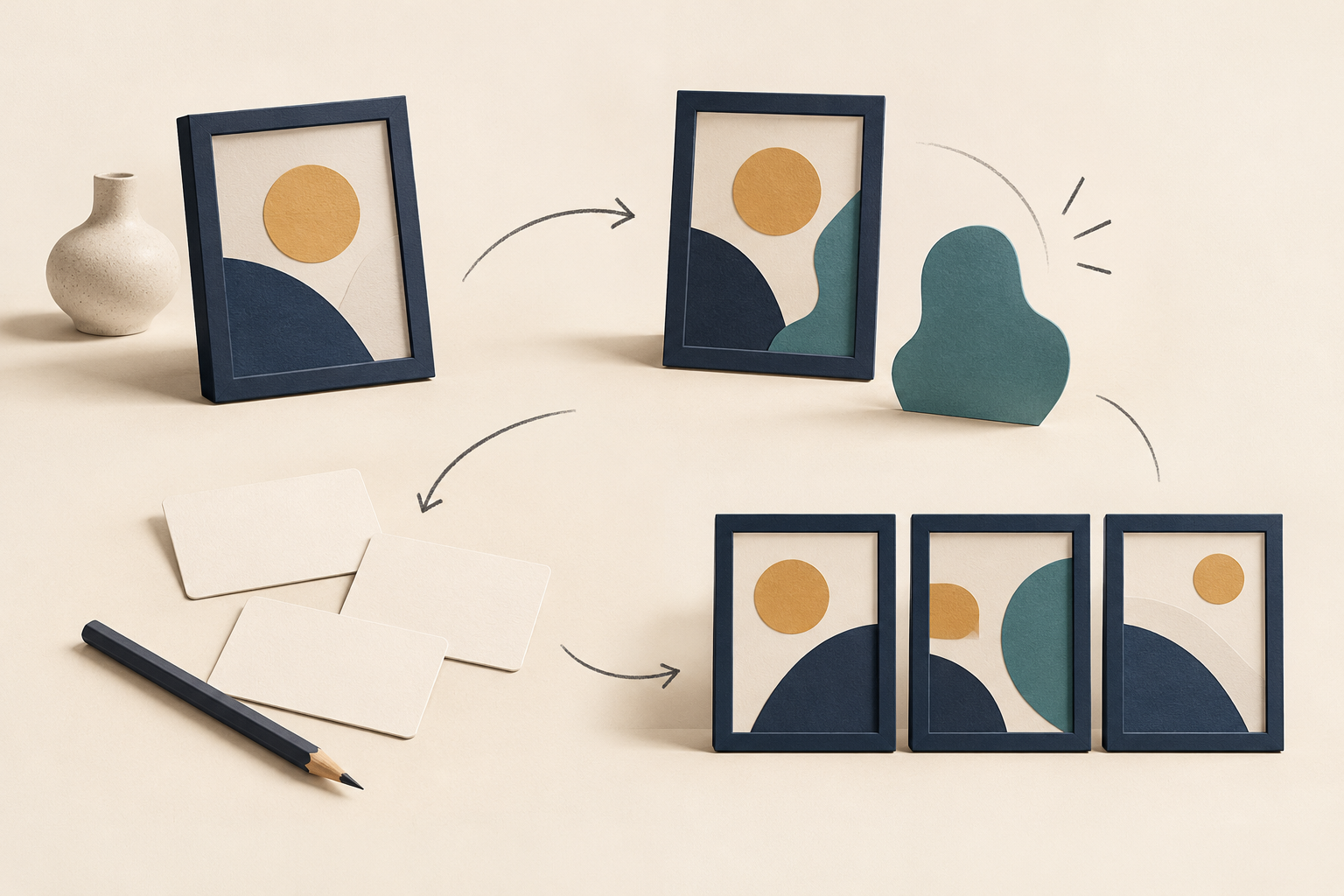
Read the learner map
Consider all 7 companion subjects while keeping the historical survey population clear.
Choose an optional exercise
Connect 1 task to the photography goal & provide a complete alternative.
Ask your current learners
Describe the choice & find out what experience or practical support the group needs.
Review the pilot feedback
Compare the intended output with what happened, then keep, revise or remove the addition.
A fictional 90-minute workshop: tell a story in 3 photographs
Imagine a tutor planning a 90-minute adult workshop about selecting a 3-image story. The optional companion task is caption writing. Every duration below is a local planning assumption in this fictional example, not a recommended timetable derived from the survey. The intended output is 3 selected photographs & an explanation of the sequence.[7]
0–10 minutes: welcome participants, confirm the goal & check access to the task. Learners can make photographs during the session or work with their own existing images. The tutor explains that caption writing is optional, with additional image-selection time available instead.
10–20 minutes: demonstrate how changing the first photograph can change a sequence’s opening. Then 20–40 minutes: participants make or gather their photographs. The tutor keeps the task within the available space & checks that a missing device or technical step has not prevented someone from starting.
40–50 minutes: each learner selects 3 images & writes or says what the sequence should communicate. Then 50–65 minutes: try the optional caption exercise, or use the same time to compare another image selection. Both routes return to the same photography goal.
65–80 minutes: review the sequences with a partner or the tutor. Ask what the viewer understood first & where the intended story became unclear. Comments should refer to a visible choice, such as image order or an omitted detail, rather than becoming a general judgment of the photographer.
80–90 minutes: revise 1 choice & collect feedback. Ask which part helped participants explain their sequence, which part they would shorten & whether the optional task belonged. The 7 time blocks total 90 minutes; actual delivery can reveal that the plan needs changing.
The pilot record would keep the selected goal, the exercise actually offered & the feedback received. If the tutor runs out of review time, that is useful evidence about this plan. It should not be rewritten as a finding that caption writing works or fails for photography learners generally.
Make the optional exercise clear in the invitation
For the fictional session, an invitation could read: “Build a story in 3 photographs. Bring a camera or phone, or use images you already have. We will practice selecting & ordering pictures, with an optional short caption exercise. You can use that time for more image selection instead. Read the session details for the venue, access information & materials.”
That wording names the main task & the choice. It does not advertise the historical survey percentages as proof that a local group wants a mixed course. Before using the invitation, the organizer would still confirm that the actual venue, equipment arrangements & accessibility information match the offer.
An educational creator could turn the same task into a short demonstration post before inviting questions about a workshop. Show the actual photographic choice, name the optional addition & ask what would make participation practical. Treat comments as feedback from that audience, not a representative replacement for the survey.
Copy this workshop-planning worksheet
Copy these fields into your existing planning document. No sign-up is needed. They are a practical aid for your own session, not a survey instrument or evidence that a particular exercise will improve learning.[7]
Learners & goal: [Who is this session for? What should participants be able to make, choose or explain?] Starting experience: [What do we need to ask rather than assume?]
Companion subject: [Which connection are we considering, & why might it serve this photography goal?] Proposed exercise: [The actual task, using familiar words.] Alternative: [A complete route for someone who does not want the added task.]
Materials & access: [Equipment, images, permissions, space & any support required.] Preparation owner: [Who confirms each item?] Unresolved item: [What must change or be supplied before the session can be offered?]
Time plan: [Minutes for each activity, including arrival, review & feedback.] Total: [The actual session length.] If time runs short: [What can be shortened without losing the main goal or the participant’s choice?]
Invitation: [Main photography task, optional addition, alternative, prerequisites & practical details.] Before booking: [What does a learner need to know to decide whether the session fits?]
Pilot outcome to observe: [A concrete output linked to the goal.] Feedback questions: [What helped, what was unclear & what would participants change?] Review decision: [Keep, revise or remove the addition, with the reason & person responsible.] Keep actual feedback separate from what you hoped the exercise would do.
The ZIP provides the calculation method, aggregate results & workshop worksheets. Original Census files remain separate. No sign-up is required.
How we built the learner map
We used the Census Bureau’s July 2022 public-use arts-participation file & its matching person replicate weights. The survey concerns US civilian, noninstitutionalized household adults. Our analysis retained 471 adults aged 18 or older with positive supplement weight & a recorded Yes to recent photography/filmmaking classes or other-means learning.[1][3]
For every companion subject, we counted recorded class Yes, other-means Yes, either Yes & both Yes on that unchanged base. An affirmative answer qualified even when its companion response was unknown. We kept all 7 other subjects & preserved coded nonresponse, not-in-universe & physically blank states separately.[6]
The survey’s single-module weight factor is 2. We applied the native weighting method & recomputed each complete ratio under all 160 person replicate weights. The displayed 95% intervals describe approximate pointwise sampling uncertainty. They do not cover every source of survey error, such as recall or proxy reporting, or establish an order between subjects.[4]
The NEA already publishes subject-level participation percentages for all adults. Our question instead describes the other subjects reported within this confirmed photography/filmmaking-learning group. The worksheet & teaching suggestions are separate applications of that map, to be reviewed with today’s learners.[5]
Let the next session follow the learners’ feedback
After the workshop, compare the intended photography output with what participants could actually show or explain. Read their comments alongside the activity that was delivered. A useful revision might be a clearer prompt, more review time or a simpler alternative, rather than adding another subject.
Use the historical map to open a planning conversation, then keep the next decision local. Name 1 possible connection, explain its purpose & give learners a choice. Their experience of the session is the evidence you need before deciding what belongs in the next invitation.
Sources & notes
- Source: US Census Bureau, July 2022 Current Population Survey’s Survey of Public Participation in the Arts, sponsored by the National Endowment for the Arts. Interviews took place July 16–25, 2022; learning questions refer to each person’s preceding 12 months. The target frame is civilian, noninstitutionalized household adults aged 18+. Self/proxy reporting status was retained under the native supplement-weight interpretation. Analysis completed October 26, 2026 UTC.
- Module D questionnaire, printed 35–42: MDQ3A–H asks about recent classes/lessons; MDQ4A–H asks about learning through other means. Classes include online classes when clarification is needed. The photography/filmmaking and creative-coding/animation/digital-art items each combine activities. They cannot be divided into separate measured audiences. The questions do not identify course price, purchase intention or a preferred teaching format.
- The fixed cohort was positive-weight adults 18+ with PEMDQ3B=1 or PEMDQ4B=1: 471 respondents. For each of the 7 remaining subjects, all 4 numerators use that same denominator. Percentage estimates are survey-weighted; the Yes counts in the first table are unweighted respondents. A person with both affirmative reports contributes once to either Yes. All 7 subjects were retained rather than selected by their observed percentages.
- The Census single-module population factor is 2 and cancels from these same-domain ratios. Each ratio was recomputed under 160 native person replicate weights. Full-sample-centered variance=(4/160)×sum of squared differences between replicate and full-sample estimates. Approximate pointwise 95% sampling intervals use estimate±1.959963984540054 standard errors. They are not simultaneous ranking intervals or total-error bounds. No pairwise significance or causal effect was estimated.
- NEA’s 2023 highlights, Figure 13, gives all-adult classes/lessons, other-means and either-method percentages by subject. This analysis describes the other subjects reported within a different group: confirmed photography/filmmaking learners.
- Recorded 1 = Yes and 2 = No were preserved along with −1 (not in universe), −2 (don’t know), −3 (refused), −9 (no answer) and physically blank states. We did not turn a lifetime-class answer into a No for recent classes, impute unknowns or estimate underlying formal-only/other-only learner groups. The music recent-class item follows the questionnaire and official API label; its printed record-layout description contains a photo-editing wording error. Exact response-state ledgers accompany the aggregate results.
- All suggested exercises, the 90-minute workshop, invitation and worksheet are fictional planning applications by Influence IQ. Their durations, materials, outputs and review choices are local assumptions, not survey measures, tested interventions, sales forecasts or universal teaching recommendations.
- The analysis used the pinned native jul22pub.dat.gz response archive and jul22rep.dat.gz person-weight archive. Native widths, compressed/uncompressed hashes, unique person-key joins, full-weight equality and all 161 published weight controls were checked. The downloadable methods preserve the original source definitions; respondent records, identifiers and individual weights are not included in the article or packet. Census/NEA have not endorsed this independent interpretation.
The findings describe US survey reports for the year before July 2022 interviews. A translation does not create findings about another country or a current workshop market. Influence IQ is responsible for the analysis, interpretation & practical examples.