Where should a recall post tell readers to look?
Link directly to the dedicated recall page. When the approved notice says where to find an identifier, include that detail if it fits.
43 U.S. Consumer Product Safety Commission (CPSC) recall notices, October 2026
Abstract
In the 43 U.S. CPSC recall notices in the October 2026 sample, 27 descriptions (63%) said where to find a model number, product ID or similar identifier. All 27 titles omitted that location. In 7 descriptions the text pointed to packaging or a purchase record and gave no location on the product. When adapting a recall for social media, link directly to the dedicated recall page and check whether the approved post can tell people where to look. Use the official notice for the affected models, safety instructions and remedy. [1][5]
A reader sees a recall post about a product that looks like one they own. They open the notice and find a model number. The next question is where to find that number on the item or in their purchase records. A location as specific as the bottom label or the purchase receipt can tell them where to start.
If you prepare recall communications, collect that detail when you collect the approved product name, hazard and remedy. Check how the detail will reach readers who see a short caption or open the linked page on a phone. Use the official notice and dedicated recall page to check the affected products and instructions. [5][6]
Places named in the recall descriptions
The descriptions supplied the locations
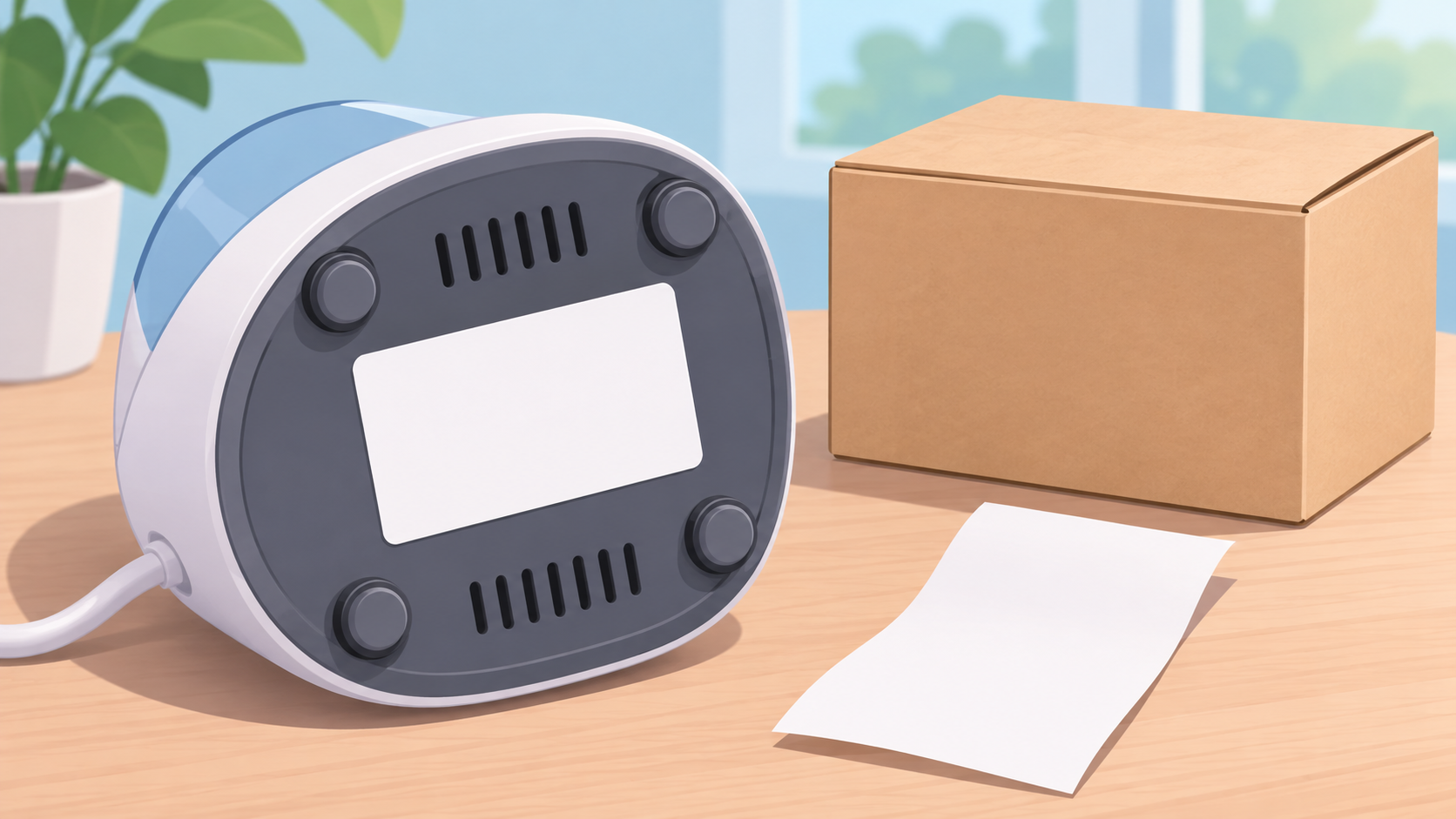
Of 43 descriptions, 31 gave a specific identifier. In 27, the text also identified where to find it. The corresponding titles could name a product or model, but none gave that location. The description therefore added a distinct piece of information a reader could use to compare their product with the notice. [1]
In 20 descriptions the text gave a location on the product or a component. Packaging appeared in 8 descriptions and 2 named a receipt or order record. The categories overlap when a description named more than one place. In 7 notices the description pointed to packaging or a purchase record and gave no on-product location. Of those, 2 also named a manual. These counts describe the wording of notices as retrieved. [1]
Make the location as precise as the approved notice allows. If the notice points to a specific label or part, name it. If the number is in a purchase record, name that record so the caption does not send people to the wrong place.
What the titles and descriptions told readers
Counts from 43 U.S. CPSC recall notices with an October 2026 recall date.
| Information in the notice | Notices |
|---|---|
| Specific identifier in description | 31 |
| Location in description | 27 |
| Location in title | 0 |
| On the product or component | 20 |
| On the packaging | 8 |
| On a receipt or order record | 2 |
| On packaging or in a purchase record, with no on-product cue | 7 |
Three places a reader might need to check
The CPSC notice for a Whatever Works microwave grill put the model number on the purchase receipt. A direction to check the receipt gives the reader a different starting point from an instruction to turn the product over. The official notice explains which model is covered and what to do. [2]
The notice for a Scotch™ thermal laminator named 2 places to find the model number, a sticker on the bottom and the product packaging. Where the notice provides both, a person who no longer has the box still has a location to check. [3]
The Van Rysel bicycle notice directed readers to a frame sticker near the bottom bracket for the model name and product ID. It listed product IDs and retailer SKUs as distinct fields. Use the same identifier name in the post and the linked page so the reader can compare the right value. [4]
Carry the location into the approved post
The CPSC social media guide calls for a concise recall message with the product, hazard and remedy, and for a direct link to the dedicated recall page. Bring the proposed location wording and the link into the same review as the rest of the recall communication. The official notice remains the place to check which models are affected and what remedy applies. [5][6]
Start with the exact identifier name and its location as written in the approved material. Keep the most useful location in the caption if it fits and the wording is approved. When several models have different locations, use the dedicated page to give the full instructions for each one. Avoid shortening a model list or a date-code range in a way that changes who is covered.
Open the scheduled post’s preview on a phone and follow its link. Check that the linked page explains where to look and that the product name and identifier match the approved text. Review any image and its accessible text against the caption. Short variants for different channels should lead to the same approved information.
How to prepare a recall post
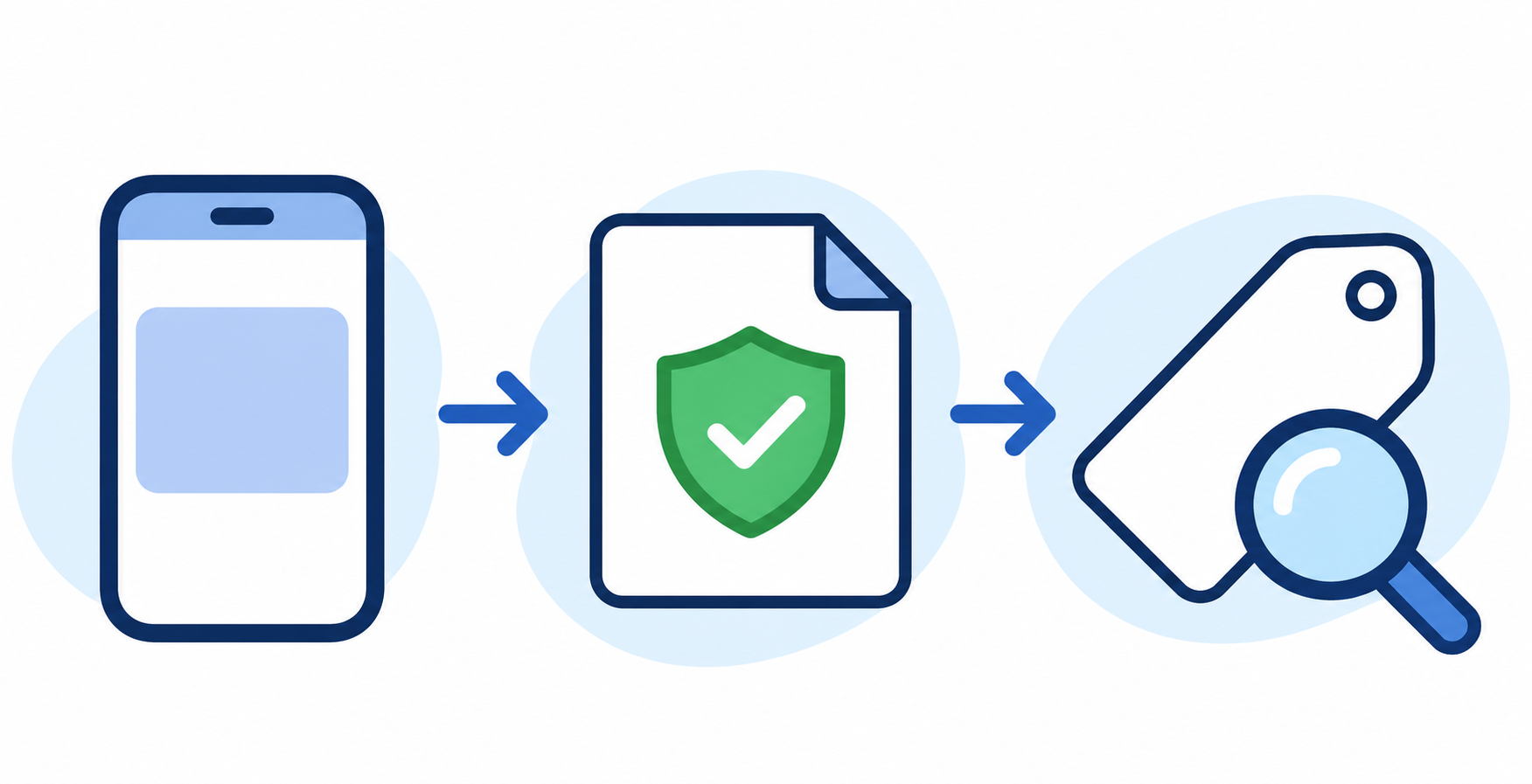
Check the source wording
Use the official notice to confirm the product, the identifier and where to find it.
Review the post and the link
Include the approved details and link directly to the dedicated recall page.
Open the preview
Follow the link and check the identifier and remedy against the official notice.
The CSV gives the notice counts. The ZIP includes notice-level coding and replay instructions in English.
Methods
The sample covers the 43 unique recall notices returned by the CPSC Recall Retrieval API with an October 2026 recall date. These were the records returned on November 18, 2026 at 14:44 UTC. The full-month result matched the 2 half-month queries. We compared each notice title with its main description. Images, captions, remedy instructions, company social posts and consumer behavior were outside the analysis. [1]
Two AI reviewers independently read every record. A location counted when the description linked a model, serial, lot, batch, SKU, UPC, item number, date code or equivalent identifier to a stated place. Color, size and purchase dates alone did not count. We counted each notice once even when it covered several products, and recorded all places named in the description.
The reviewers agreed on the 27 clear cues and flagged 1 uncertain case, where a package carried a string of letters and numbers without a named identifier type. Including it gives 28 of 43. We classified a price hangtag separately from packaging. Counting it as packaging raises that category from 8 to 9, with the other headline counts unchanged. The archive contains the coding and a replay for the totals. [7][8]
Sources and notes
- CPSC Recall Retrieval API, October 2026 sample, retrieved November 18, 2026.
- CPSC notice 27-050, Whatever Works microwave grills.
- CPSC notice 27-024, Scotch™ thermal laminators.
- CPSC notice 27-017, Van Rysel GRVL AF bicycles.
- CPSC social media guide for recalling companies.
- CPSC Recall Handbook.
- CPSC notice 27-008, GBYMIUY magnetic toy sets.
- CPSC notice 27-007, Designs Direct floor lamps.
All language editions use the same U.S. CPSC notices from October 2026.