An unanswered complaint can hide two different problems
A customer is still waiting. Does the report show a recorded read, and is there a reply? French online-shopping complaint data show why businesses should check both.
Original analysis of reports dated 2025 on France’s SignalConso service, using the October 21, 2026 data snapshot.
Abstract
To improve customer complaint follow-up, separate reports with no recorded read from reports that have been read but have no recorded reply. In 111,745 online-shopping reports forwarded to businesses through France’s SignalConso service, 20.4% had no recorded read and 4.9% had a recorded read without a reply. The reports were dated 2025; their later status comes from an October 21, 2026 snapshot.[1][2]
The mix differed across the eight largest reporting paths. Reports about an order never delivered while the website remained open had a 31.9% share with no recorded read, compared with 14.6% for incomplete orders. Their read-without-reply shares were much closer: 4.4% and 4.2%. These are reports submitted to one French service, not rates for all orders or businesses. The finding suggests a practical check: find where follow-up stops before deciding which part of the process to change.
A customer messages a small shop about a missing order. The person managing its social account passes the message to someone else. A week later, the customer asks again. The team knows there is an unanswered complaint, but that description leaves an important question open: did the next person see it, or did they see it and never send an answer?
Those situations call for different questions. One is about whether the complaint reached someone who could act. The other is about what happened after that person read it. A single reply percentage can make the two look like the same problem.
We looked for that distinction in SignalConso, France’s public consumer-reporting service. Its open data record whether a report was forwarded to a business, read and answered. They offer a way to examine where recorded follow-up stopped, although they do not reveal what happened in a shop’s email, social inbox or delivery operation.
Find the unanswered step

Most unanswered reports had no recorded read
The source contained 170,374 online-shopping reports dated 2025. Of those, 111,745 were recorded as forwarded to a business. We use that forwarded group for the main comparison. The other 58,629 reports, or 34.4% of the full group, were not recorded as forwarded and are not counted as failures to respond.[1][2]
Among the forwarded reports, 83,409 had both a recorded read and reply: 74.6%. Another 22,838 had no recorded read, or 20.4%. The remaining 5,498 had been recorded as read but had no recorded reply, or 4.9%. Each report appears in exactly one of these three groups.
Looking only at the 28,336 reports without a recorded reply changes the denominator. Within that smaller group, 80.6% had no recorded read and 19.4% had a recorded read without a reply. That does not mean four in five unhappy shoppers were ignored. It describes the status recorded for unanswered reports in this particular service.
SignalConso’s official dashboard already separates reading from replying. It shows the share of forwarded reports that were read, then the share of read reports that received a reply.[5] Here, we compare the eight most common complaint paths on one base: all forwarded reports in each path. That lets a retailer see how the two forms of recorded nonresponse differ across issues, without mistaking a change in the denominator for a change in performance.
For a business reviewing its own complaints, the distinction helps frame the first investigation. If most open cases have no evidence of being read, editing the reply template may leave the earlier problem untouched. If cases have been read but remain unanswered, check who owns the next action. These are process suggestions; the data do not show which intervention would work.
Most forwarded reports had a reply recorded
France. 111,745 online-purchase reports marked as forwarded to a business. Each report appears in one group.
| Recorded follow-up | Reports | Share of forwarded reports |
|---|---|---|
| No recorded read or reply | 22,838 | 20.4% |
| Read, without a recorded reply | 5,498 | 4.9% |
| Read and replied | 83,409 | 74.6% |
A missing order looked different from an incomplete one
We compared the eight largest reporting paths by the number of forwarded reports, choosing them by volume before examining their outcomes. Together they contained 92,383 reports, or 82.7% of the forwarded group. The labels come from the choices consumers made when filing a report; they are not findings that a business broke the law.[2]
The largest path was “order never delivered and the website is still open,” with 32,440 forwarded reports. Of these, 10,340 had no recorded read: 31.9%. A further 1,415 had a recorded read without a reply: 4.4%. The remaining 20,685, or 63.8%, had a recorded reply.
For incomplete orders, 958 of 6,540 reports had no recorded read: 14.6%. Another 273, or 4.2%, had a recorded read without a reply. The difference from the never-delivered group was therefore concentrated in the first category. The no-recorded-read shares were 17.2 percentage points apart, while the read-without-reply shares were only 0.2 points apart.
Reports of a false price reduction provide another contrast. Among 3,177 forwarded reports in that path, 9.1% had no recorded read and 5.2% had been read without a reply. “False price reduction” is the consumer’s selected report category, not our conclusion that the advertised discount was unlawful.
The paths do not all describe equally specific problems. “A physical product” and “other website issue” are broader choices. Keeping those labels visible is more honest than converting every row into an apparently precise diagnosis. The full set of 47 second-level paths is available in the download.
Where follow-up stopped in the eight largest complaint groups
France. The eight reporting paths with the most forwarded reports; 82.7% of the forwarded group. Groups were selected by count, not response rate.
| Reported problem | Reports | No recorded read | Read; no reply | Read and replied |
|---|---|---|---|---|
| Order never delivered; site still open | 32,440 | 31.9% | 4.4% | 63.8% |
| After-sales service stopped replying | 15,118 | 18.6% | 5.3% | 76.1% |
| Physical product | 11,273 | 17.6% | 5.1% | 77.3% |
| Other website issue | 10,946 | 13.7% | 6.3% | 80.0% |
| Delivery late or parcel lost | 8,908 | 14.8% | 3.7% | 81.5% |
| Incomplete order | 6,540 | 14.6% | 4.2% | 81.2% |
| Advertising | 3,981 | 14.2% | 5.6% | 80.2% |
| Reported false discount | 3,177 | 9.1% | 5.2% | 85.7% |
An initial complaint and a later reply are different events
One large path reads “after-sales service no longer responds.” It contained 15,118 forwarded reports. Yet 11,512 of them, or 76.1%, had a recorded reply in SignalConso. This is not a contradiction: the path describes the problem the consumer reported, while the reply field describes a later event on the reporting service.
It also does not show that SignalConso caused a recovery, or that the customer was satisfied. Across all forwarded reports, recorded replies included 45,827 promises of action, 28,576 responses disputing the report and 9,006 responses saying it concerned the wrong business. These sum to the 83,409 recorded replies. A promise is not evidence that the action happened, and a dispute is not an official ruling.[1][2]
That separation matters for a creator selling merchandise as much as for a retailer. “We replied” answers one operational question. “The missing item arrived” answers another. Keeping both facts in a case record helps the next colleague see whether there is still something to do.
The source does not establish why a report has no recorded read. We cannot infer that a business lacked an account, deliberately ignored a customer or never saw a message elsewhere. Use the wording “no recorded read” when discussing this result; it keeps the observation separate from a story about the cause.
The contrast appeared in every quarter
A year’s total can conceal a change in which reports arrived when. We therefore split reports by the quarter of their report date and repeated the comparison for never-delivered orders, incomplete orders and reported false price reductions. Each percentage still uses forwarded reports within the same path and quarter.[2]
The never-delivered path had a higher no-recorded-read share than both comparison paths in all four quarters. Its quarterly shares ranged from 29.0% to 36.7%; incomplete orders ranged from 11.9% to 18.8%. The annual contrast was not produced solely by pooling these three paths across different quarters.
This is a composition check, not a causal test or a measurement of response speed. The quarter of a report’s date is not the date someone read it. The source snapshot does not supply the event times needed to calculate hours to first reply. Changes in businesses, complaint details or reporting behavior could still matter.
The useful next question for a team is similarly specific: does its own mix of unanswered cases change by issue type? Compare like with like before making a broad claim that support is improving or deteriorating.
The non-delivery contrast appeared in every quarter
France. Share with no recorded read, within each complaint pathway and quarter of 2025. The three pathways are descriptive comparisons from the eight-group exhibit.
| Report quarter | Never delivered; site open | Incomplete order | Reported false discount |
|---|---|---|---|
| January–March | 29.0% | 18.8% | 8.2% |
| April–June | 30.8% | 13.1% | 8.5% |
| July–September | 30.1% | 15.5% | 9.6% |
| October–December | 36.7% | 11.9% | 9.6% |
Give the next action a visible owner
The study suggests separating three checks in a small business’s complaint routine: whether someone has reviewed the case, whether an answer has been sent and whether the promised next step has evidence behind it. The third check goes beyond what our read-and-reply comparison can establish.
Start with the channels where complaints can arrive. A creator may have a shop email, an Instagram inbox and comments under a launch post. A retailer may also receive reports through an external service. Decide who reviews each channel and who covers absences. Do not treat a forwarded link as proof that the receiving person read the case.
Next, make the handoff concrete. Name the person who can answer the customer, the information they are waiting for and the next check-in. A public comment may need a brief acknowledgment while order details move to a private channel. Keep addresses, payment details and other personal information out of the public thread.
Finally, record what supports the outcome. A reply saying a replacement will be sent is different from a dispatch record, and a dispatch record is different from confirmation of receipt. Choose the evidence relevant to the actual promise. The purpose is to make unfinished work visible, not to add a score that rewards closing cases early.
Keep the review, reply and outcome separate
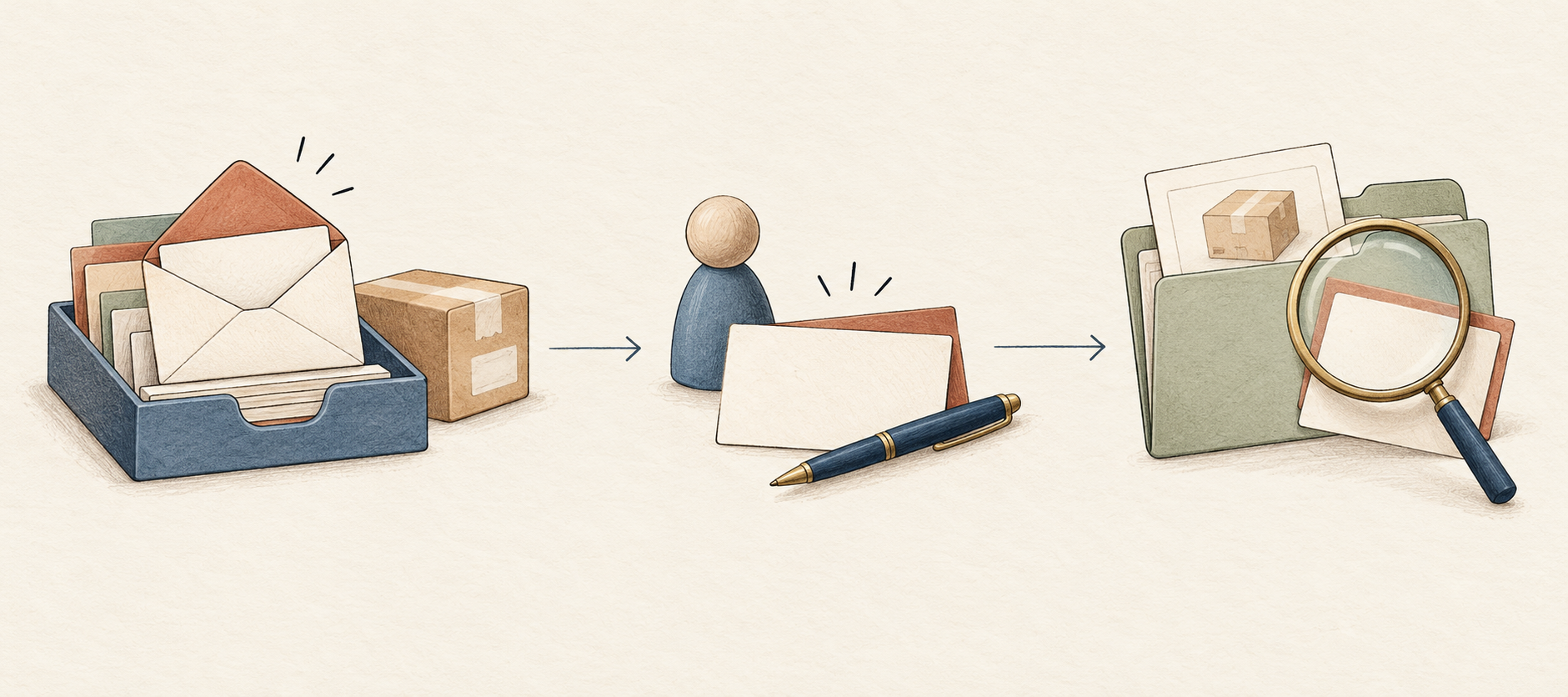
Review the case
Name who checks the channel and confirm that they reviewed the message.
Assign the reply
Record the next action, the responsible person and the follow-up date.
Check what happened
Keep the reply, the promise and evidence of the outcome distinct.
A follow-up worksheet you can use today
Use one record per case, connecting repeat messages about the same issue where your own records allow it. The study counts reports, so its totals cannot tell you how many unique customers or businesses were involved. Your team can make that distinction explicitly in its own process.
Case and context: internal reference ______; issue described by the customer ______; channel and original message link ______; related case references ______; date received ______.
Review: person responsible for checking the channel ______; backup ______; evidence that the case was reviewed ______; information still missing ______. If the channel has no reliable read marker, record the person’s review rather than inventing a timestamp.
Reply: person responsible ______; next action ______; planned follow-up date ______; reply link or reference ______; what was actually promised ______.
Outcome: evidence of action ______; customer follow-up, if any ______; unresolved point ______; next owner and check-in ______. An empty field stays an open question. A response sent, a refund promised and a refund confirmed belong in different entries.
The worksheet and fictional example are included in the free download and reproduced here so you can adapt them without registering. Set follow-up dates that fit the case and applicable obligations; this dataset does not provide a universal response-time target.
- Download the findings and coverage tables (CSV)
- Download the analysis, blank worksheet and fictional example (ZIP)
No sign-up required. The ZIP contains aggregate data, code and the worksheet. Technical reproduction instructions are in English; the worksheet and example above are available in every article language. No individual report records are included.
A fictional launch shows why the handoff matters
Imagine a creator named Maya selling a small stationery collection through her own shop, Paper Harbor. Every name and case detail in this example is fictional. A customer leaves an Instagram comment saying that a two-item order arrived with only one item. Maya’s colleague records the case as PH-DEMO-01 and links the public comment to the private order conversation.
The first entry says: “Incomplete order; customer says the notebook is missing.” The channel reviewer is Maya, with Jordan as backup. Maya records that she reviewed the message and asks Jordan to check the packing record. The reply-owner field names Jordan. The next action is to confirm what was packed before promising a remedy.
At this point, the record supports “reviewed; reply pending.” It does not support “resolved.” Jordan checks the order and sends a private reply offering a replacement. The reply reference is added, and the promise field reads “replacement notebook to be dispatched.” The outcome evidence is still empty.
Later, Jordan adds the replacement dispatch reference. The team keeps the customer’s next follow-up separate. If the customer confirms receipt, that confirmation gets its own reference. If no confirmation arrives, the record says what the team does know instead of silently treating dispatch as receipt.
Now imagine the original handoff had only been a copied link in a busy group chat. Without a named reviewer, Maya might keep rewriting the public response while nobody checked the packing record. The worksheet makes that missing action easier to spot. This is an illustrative workflow, not evidence that it would reduce complaints by a particular amount.
How we read the public records
We downloaded the DGCCRF’s SignalConso open data on October 21, 2026. The frame used the source’s creationdate field from January 1 through December 31, 2025 and the exact online-purchase category AchatInternet. The producer describes this field as the report’s transmission date; it is not a verified date of delivery to the business. We retained 170,374 unique report IDs. Publisher metadata were unchanged during export, and the API count agreed with the file length.[1][2]
The protocol fixed the first two source subcategory levels as the reporting path, preserving their order and labels. The main exhibit selected the eight paths with the most forwarded reports, requiring at least 200 in each and resolving ties by the literal path. All 47 paths remain in the aggregate tables. The particular contrasts discussed here were chosen after inspecting this fixed exhibit; they were not preregistered directional hypotheses.
We checked the transmission, read and reply flags against status categories. All forwarded records in this snapshot fell into the five terminal status categories, which reconciled exactly with the three displayed stages. There were no duplicate IDs, invalid flags or reply-without-read combinations. A separate implementation reproduced the counts, path selection and quarterly calculations.
The 58,629 nonforwarded records comprised 58,060 with status NA, 435 marked for GDPR deletion and 134 internal-informant records. They stay outside the reply denominator. The protocol excluded an explicit Influenceur tag; none was observed. The 12,004 records with null tags were retained as having no observed tag, not as proof that no influencer context existed.
These are descriptive counts of selected administrative reports, not survey estimates. We do not attach sampling confidence intervals to them. People choose whether to report, and multiple reports may concern the same business or customer. No company or order denominator is available in the analyzed fields.
The download preserves aggregate counts and code that reproduce the tables, plus the source queries and checksum identifying our raw snapshot. The live source can change, so rebuilding the aggregates from raw records requires that exact snapshot. Current SignalConso help explains its read and reply states, but present procedures do not supply missing historical event times or prove what happened outside the service.[3][4]
Sources and notes
- DGCCRF, SignalConso open data. Dataset processed October 21, 2026 at 01:58:18 UTC; downloaded the same day. Study frame: 2025 report dates and exact AchatInternet category. Source reuse under the publisher’s Etalab Open Licence. Influence IQ performed the analysis; no endorsement by the producer is implied.
- Influence IQ analysis package: fixed protocol, source manifest, complete aggregate tables, calculation code and worksheet. Main denominator 111,745 forwarded reports; full frame 170,374. All percentages use unrounded counts. The live data source is mutable; included aggregate counts reproduce the published tables, while raw reconstruction requires the manifest’s exact source snapshot.
- SignalConso professional help, explanation of report states. The current interface distinguishes unread, read awaiting a reply and closed reports. Our historical data classification uses the exported status and flag fields, checked together. Help reviewed October 22, 2026.
- SignalConso professional help, closed reports. A closed report can still be read, while a platform reply is no longer available; direct contact may be possible if the consumer shared contact details. This is why the platform snapshot does not establish every later or off-platform interaction.
- DGCCRF, SignalConso dashboard. The dashboard reports read reports as a share of forwarded reports and replied reports as a share of read reports. Our main issue-path exhibit uses forwarded reports as the denominator for each displayed state. Reviewed October 22, 2026.
Every language edition describes the same French SignalConso reports. Translation does not turn these findings into a study of another market.